
Yeah… this is where a lot of people get stuck.
You pick a “popular” series, hand it to a 3rd grader, and either:
- they breeze through it like it’s nothing
- or they stall out after 5 pages and suddenly “hate reading”
Neither tells you the truth.
The real problem? You’re not matching reading stamina + story structure + emotional level at the same time. Most people only look at “age” or “grade.” That’s where it breaks.
Let me walk you through this like I would with a new teacher or a parent who’s frustrated.
The #1 Reason Kids Reject Chapter Books (And Nobody Tells You This)
It’s not vocabulary.
It’s not attention span.
It’s chapter fatigue.
That moment when a kid flips the page, sees a wall of text, and their brain quietly says: nope.
Here’s what’s actually happening:
- Chapters are too long
- Not enough illustrations or visual breaks
- Slow start (nothing happens early)
- Too many characters too quickly
You can have a “perfect” book level-wise and still lose the kid in 2 minutes.
Fix this first: pick books with short, fast-moving chapters. Always.
What a “Good” Chapter Book for 3rd Grade Actually Looks Like
Forget labels like “Grades 2–4.” Useless.
Here’s what I look for after years of seeing what kids actually finish:
- Chapter length: 3–8 pages max
- Sentence style: Mostly simple, occasional challenge words
- Visual breaks: Illustrations every few pages (even small ones)
- Plot speed: Something happens in the first 2–3 pages
- Tone: Light, funny, or slightly adventurous—not heavy
If a book misses 2–3 of these? It’s a gamble.
The Safe Picks (These Almost Never Fail)
Start here if you’re tired of guessing.
Funny + Easy Wins (Hook Them Fast)


- Diary of a Wimpy Kid
- Dog Man
- Captain Underpants
- The Bad Guys
Why these work:
- Tons of visuals
- Short bursts of text
- Immediate payoff (humor on page 1)
If a kid says “I hate reading,” this is where I start. Every time.
Balanced Chapter Books (The Sweet Spot)


- Magic Tree House
- Junie B. Jones
- Judy Moody
- Nate the Great
These are gold because:
- Slightly more text, but still manageable
- Clear story arcs
- Familiar characters across books
This is where reading confidence actually grows.
Adventure + Early Fantasy (For Kids Ready to Level Up)
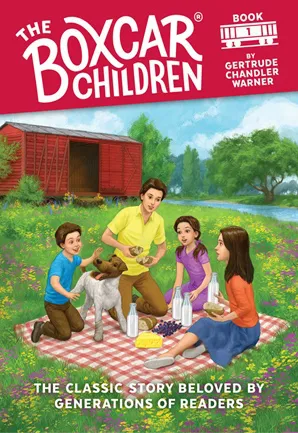

- The Boxcar Children
- A to Z Mysteries
- Dragon Masters
- Geronimo Stilton
These work when:
- The kid already reads independently
- They enjoy problem-solving or fantasy
But push too early, and they’ll bounce off hard.
Quick Match Table (Stop Guessing)
| Kid Type | What They Struggle With | Start With |
|---|---|---|
| “I hate reading” | Low stamina, boredom | Dog Man / Bad Guys |
| Reads but avoids books | Slow engagement | Magic Tree House |
| Reads comfortably | Needs challenge | A to Z Mysteries |
| Loves stories already | Wants depth | Boxcar Children |
Match the kid—not the grade level.
The Mistake I See Over and Over
Parents (and even teachers) jump straight to “real books.”
Meaning:
- No pictures
- Long chapters
- Slower pacing
Looks impressive. Fails in practice.
Here’s the truth:
Illustrated chapter books are not “baby books.” They are transition tools.
Skip them, and you make reading feel like work.
How to Tell in 60 Seconds If a Book Will Work
Pick up the book and check this:
- Flip to a random page
- Count paragraphs
- Look at spacing
If it feels dense to you, it’s overwhelming to them.
Also:
- First page boring? Put it back.
- No visual breaks in 10 pages? Skip it.
Kids don’t “grow into” bad matches. They quit them.
The Weird Edge Case (This One Confuses Everyone)
Some 3rd graders can read high-level books…
…but still prefer simpler ones.
That’s not regression. That’s emotional reading level vs decoding level.
Example:
- Can read a Harry Potter and the Sorcerer’s Stone page
- Still enjoys Dog Man more
Totally normal.
Reading ability ≠ reading preference. Don’t mix them up.
Building a Series Habit (This Is the Real Goal)
You don’t want them finishing one book.
You want them asking: “Is there another one?”
That’s why series matter.
Here’s how to do it right:
- Start with something easy → build momentum
- Stick to one character/world → familiarity reduces effort
- Let them binge → don’t force variety too early
Once they’re hooked? Then you expand.
Still Not Working? Try This Reset
If a kid is resisting hard:
- Drop down one level (yes, even if it feels “too easy”)
- Switch to humor-heavy books
- Read the first chapter with them
- Let them stop early (don’t force completion)
The goal is momentum, not discipline.
The One Thing I Wish Everyone Knew
Reading isn’t about difficulty.
It’s about friction.
Remove friction:
- shorter chapters
- faster stories
- familiar characters
And suddenly… the same kid reads voluntarily.
That’s the shift you’re looking for.
Once it clicks, you won’t need to push anymore.