
Every EPUB file follows one of two design philosophies. Either the text moves and reshapes itself to fit the screen, or the page stays locked exactly as designed.
Those two approaches are called Reflowable EPUB and Fixed Layout EPUB.
Both use the same EPUB format. Both work on modern eReaders, tablets, and reading apps. Yet they behave completely differently. Understanding that difference decides whether your book reads smoothly—or becomes frustrating to use.
Think of it like printing a book versus pouring water into a glass.
One stays rigid. The other adapts.
The real question is not which format is universally better. The real question is which format matches the content you are publishing.
First, Understand What an EPUB Really Is
An EPUB (Electronic Publication) is a digital book format based on web technologies such as HTML, CSS, and XML. Because it works like a small website inside a file, text can behave in flexible ways.
Readers can:
- Change font size
- Switch fonts
- Adjust line spacing
- Rotate screens
- Read on phones, tablets, or eReaders
That flexibility is the entire reason EPUB exists.
But not every book benefits from flexibility.
Some books depend on precise visual design. Others depend on clean readable text. EPUB offers two ways to handle that difference.
Reflowable EPUB
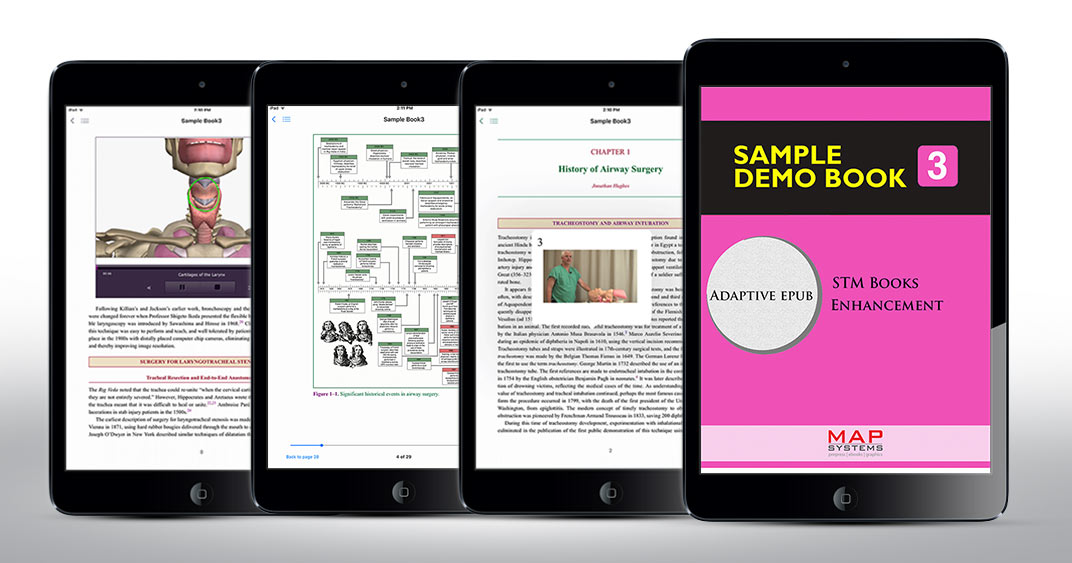
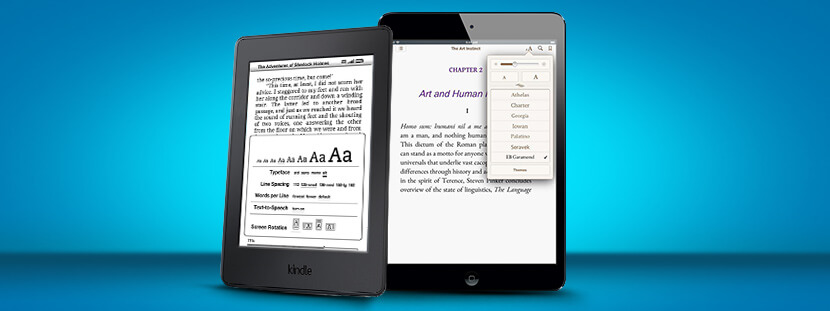
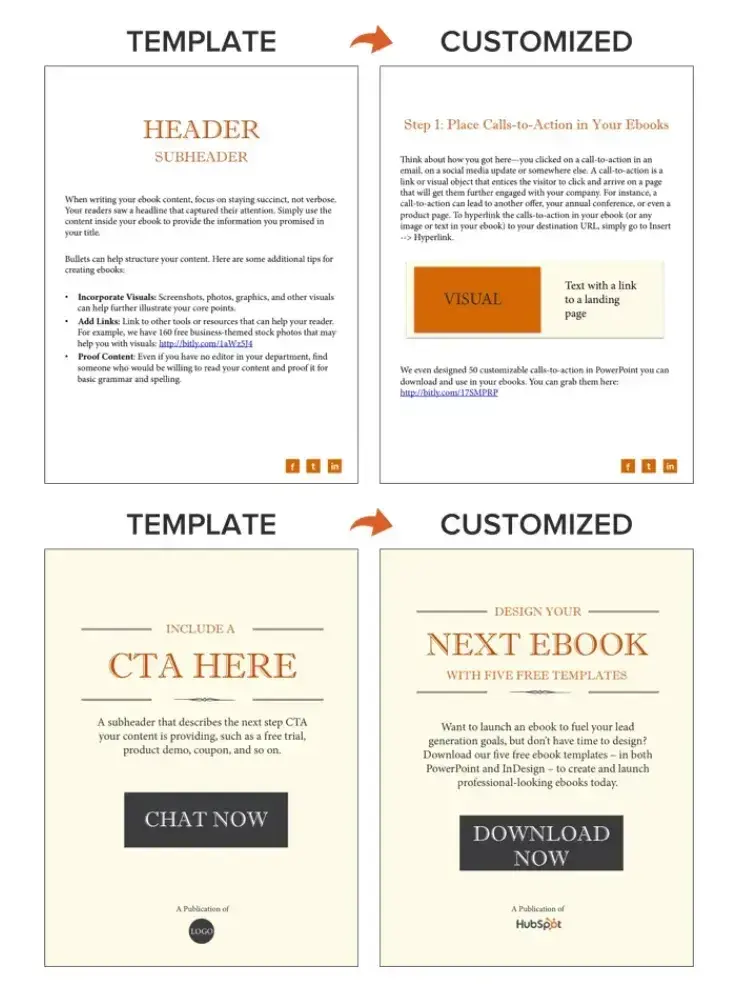
4
Reflowable EPUB behaves like a responsive webpage.
Text flows freely depending on the screen size and reader settings. Increase the font size and the paragraph rearranges itself automatically. Rotate the device and the layout reorganizes again.
Nothing is locked.
Imagine pouring sand into different containers. The shape changes, but the material stays the same.
Why This Format Exists
Most digital books are pure text. Novels, essays, reports, guides, and documentation rely on readability, not visual structure.
Reflowable EPUB allows readers to control how comfortable the text feels.
A reader with poor eyesight can enlarge the font.
Someone reading on a small phone can zoom in without breaking the layout.
Accessibility improves dramatically.
How Reflowable EPUB Works Technically
Inside the EPUB package:
- Content is written in HTML
- Styling comes from CSS
- Navigation uses NCX or HTML5 navigation documents
Since HTML naturally adapts to screen width, the layout automatically reshapes itself.
That is why reflowable EPUB files behave almost like a miniature website.
Strengths of Reflowable EPUB
Excellent readability
Text adjusts to the reader’s preferences. Long reading sessions become comfortable.
Small file size
Images are minimal. Most content is text.
Device compatibility
Works smoothly on:
- Kindle devices (after conversion)
- Apple Books
- Kobo
- Google Play Books
- Android reading apps
- Smartphones and tablets
Accessibility support
Screen readers and adaptive technologies work better when content can reflow.
Where Reflowable EPUB Struggles
Design precision disappears.
Because text shifts constantly:
- Image placement may move
- Page numbers become meaningless
- Complex layouts break
Magazines, comics, and heavily illustrated books rarely survive reflowable formatting without visual chaos.
Fixed Layout EPUB
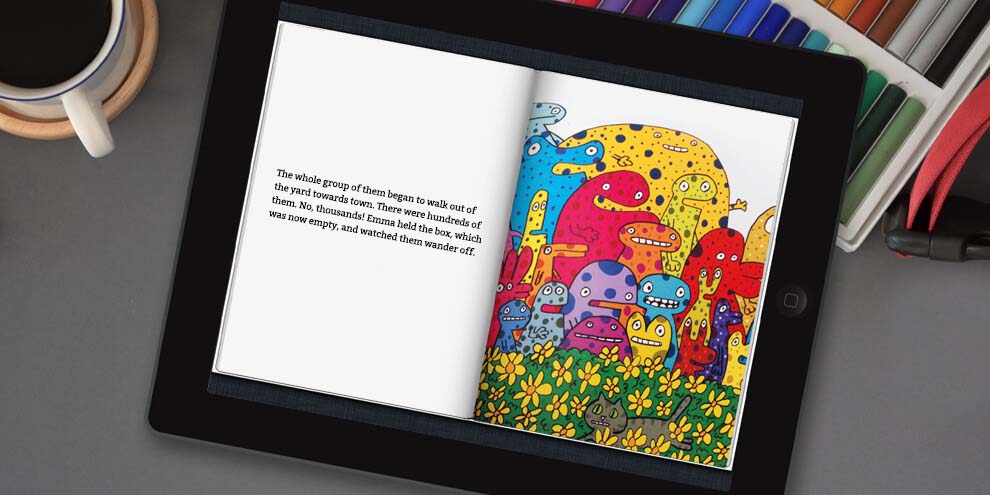

4
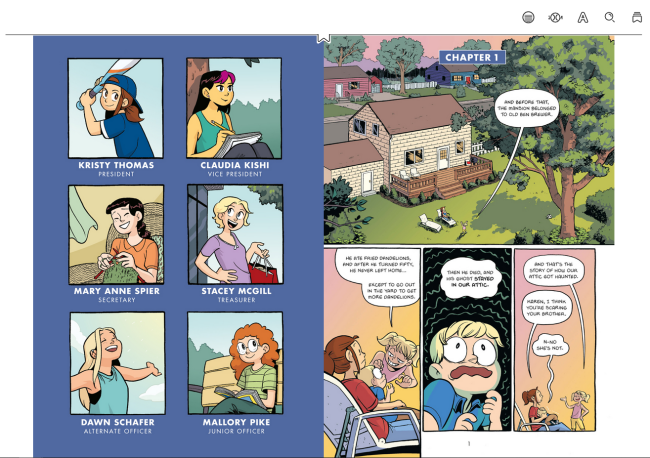
Fixed Layout EPUB behaves like a digital photograph of a page.
Nothing moves.
Text stays exactly where the designer placed it. Images remain anchored. Fonts remain unchanged.
Imagine printing a page and sealing it under glass.
No resizing. No shifting.
Why Fixed Layout Exists
Certain books rely on visual composition, not just words.
Consider:
- Comic books
- Children’s picture books
- Cookbooks with image-heavy layouts
- Magazines
- Graphic textbooks
- Design portfolios
In these cases, moving text would destroy the meaning of the page.
A speech bubble must sit beside the character speaking.
A recipe image must appear next to instructions.
A diagram must align with labels.
Fixed layout protects that design.
How Fixed Layout EPUB Works
Instead of flexible HTML flow, each page behaves like a positioned canvas.
Developers control exact placement using CSS properties such as:
- absolute positioning
- viewport scaling
- fixed page dimensions
The result resembles a slideshow where every page is precisely designed.
Strengths of Fixed Layout EPUB
Design accuracy
Every reader sees the page exactly as intended.
Perfect for visual storytelling
Comics, children’s books, and illustrated guides maintain artistic structure.
Reliable image placement
No risk of images jumping to awkward positions.
Where Fixed Layout EPUB Struggles
Flexibility disappears.
Readers cannot:
- Increase font size easily
- Reflow text
- Adjust layout for smaller screens
On small smartphones, a fixed layout page may shrink too much to read comfortably.
Accessibility also becomes weaker because text may behave more like an image.
Direct Comparison: Reflowable vs Fixed Layout
| Feature | Reflowable EPUB | Fixed Layout EPUB |
|---|---|---|
| Text behavior | Resizes and adapts | Locked in place |
| Reader font control | Full control | Limited or none |
| Best for | Novels, articles, reports | Comics, picture books, magazines |
| Screen adaptability | Excellent | Limited |
| Design precision | Low | Very high |
| Accessibility | Strong | Weaker |
| File size | Smaller | Larger |
No winner exists here. Each format solves a different problem.
Why Most eBooks Use Reflowable EPUB
Look at typical books sold online.
Novels dominate the market. Fiction rarely needs complex page design. Readers care about comfort, not layout.
Reflowable EPUB serves that need perfectly.
Because of that, publishing platforms prefer it.
Major distributors such as:
- Amazon Kindle (after conversion)
- Apple Books
- Kobo
- Google Play Books
expect standard books to be reflowable.
It reduces compatibility problems across thousands of devices.
Why Some Books Must Use Fixed Layout
Now imagine converting a comic book into reflowable text.
Speech bubbles detach from panels.
Artwork floats away from captions.
Panel sequencing breaks.
The reading experience collapses.
Fixed layout becomes mandatory when page design communicates meaning.
Children’s books provide a classic example.
Often a sentence appears beside a large illustration. The image carries half the storytelling.
Moving the text destroys the rhythm of the page.
The Hidden Factor: Screen Size
Screen size changes everything.
Large tablets handle fixed layout well.
Small phones struggle.
Picture a comic page designed for a 10-inch tablet. Shrink it to a 5-inch phone and details become tiny.
Readers must zoom constantly.
Reflowable EPUB avoids this problem entirely because text reorganizes itself automatically.
That single difference explains why novels remain overwhelmingly reflowable.
Accessibility: A Quiet but Important Issue
Accessibility determines whether people with disabilities can read your book.
Reflowable EPUB supports:
- screen readers
- font scaling
- text-to-speech
- high contrast modes
Fixed layout pages sometimes behave like images. Screen readers may struggle to interpret the content unless additional accessibility markup exists.
Publishers producing educational material often choose reflowable EPUB for this reason alone.
When Publishers Use Both Formats
Some projects combine both approaches.
Large textbooks sometimes contain:
- reflowable chapters for reading
- fixed-layout pages for diagrams or charts
Hybrid EPUB structures can handle that mixture, though development becomes more complex.
Production teams must carefully structure HTML and CSS to avoid breaking reading systems.
Quick Decision Guide
When choosing between the two formats, the decision usually becomes obvious once you ask one question:
Does the meaning of the page depend on visual design?
If the answer is no, reflowable EPUB wins.
If the answer is yes, fixed layout becomes necessary.
Reflowable EPUB works best for
- novels
- blog compilations
- technical documentation
- academic papers
- nonfiction books
- long-form guides
Fixed Layout EPUB works best for
- comics and graphic novels
- children’s picture books
- magazines
- cookbooks
- art catalogs
- photography books
The Mistake Many First-Time eBook Creators Make
Designers sometimes try to recreate a printed page inside an eBook.
That instinct causes trouble.
Digital reading behaves differently from paper. Readers expect control over font size, spacing, and screen orientation.
Forcing rigid design into a format meant for flexibility often leads to:
- unreadable text on phones
- broken layouts
- poor accessibility
Successful EPUB design respects how digital reading works.
So Which Format Is Better?
Better depends entirely on the type of content.
For most books, especially text-heavy ones, reflowable EPUB is the superior choice. It adapts to devices, improves accessibility, and keeps reading comfortable.
Fixed layout excels only when visual composition carries meaning.
One format prioritizes reading comfort.
The other protects visual storytelling.
Understanding that difference prevents one of the most common mistakes in digital publishing: choosing the wrong structure for the content.
And once the structure matches the purpose, the EPUB behaves exactly as it should—clear, readable, and effortless to use.